
The Diputación de Málaga and the Diocese of Malaga have signed an agreement for the conservation and rehabilitation of churches, parishes, hermitages and temples of historical and heritage character in the province, the Málaga Sacra plan, which is has a budget of eight million euros.
The president of the Malaga provincial authority Francisco Salado, and the bishop of Malaga, Monsignor José Antonio Satué, have sealed the agreement to launch this plan, which will begin with actions in the church of Our Lady of the Immaculate Conception, in Daimalos, a district of Arenas; and in the church of Our Lady of the Rosary, in Benaoján.
Salado stressed that the agreement stems from the Diputación de Málaga’s conviction that religious heritage is not only an important cultural and tourist attraction for the municipalities, but is much more than that.
He emphasised its importance because many of the churches declared as Cultural Heritage Sites or included in heritage protection catalogues are in a state of advanced disrepair. In fact, the mayors of the province had frequently requested a plan of this kind.
“In villages,” he added, “churches and chapels are the main historical, cultural, social, and even symbolic landmarks, and the social life of the residents revolves around them. Festivals, traditions, and pilgrimages are organised around these places of worship, which are true meeting places, celebrations and vibrant life. Furthermore, they help retain the population and strengthen the identity, pride, and attachment of the residents to their villages.”
Francisco Salado also pointed out that these days, as the heat begins to intensify, churches are often the most important climate refuges in towns and cities. Their thick stone walls, high ceilings, small windows, and strategic location and orientation allow these buildings to maintain a stable temperature in both winter and summer.
The president noted that three million euros have been allocated in this year’s budget to launch the Málaga Sacra project, and another five million euros are earmarked for next year. The plan is primarily aimed at municipalities with fewer than 20,000 inhabitants, although churches in larger towns may also be included.
To carry out this project, a technical committee has been created with members from the Diputación de Málaga and the Diocese. This committee will be responsible for analysing the condition of the churches and, in this way, establishing priorities. First, a report on the state of the church will be prepared. Subsequently, a project proposal will be drafted and supervised by technicians from the provincial authority. Once approved, a grant will be awarded to the Diocese so that it can put the necessary work out to tender and award the contract.
Salado indicated that at the end of last year the Bishopric sent a letter to its parishes to find out the state of the places of worship and, for the moment, 53 churches in the province have already shown their interest in joining this plan, although now the technical commission will evaluate which ones are priorities.
Criteria for prioritising actions
For his part, José Antonio Satué expressed his gratitude for “the Diputación de Málaga’s sensitivity in helping to maintain and preserve the heritage that is a source of pride for the towns.”
He explained that there are more requests for help than there are financial resources to meet them, so criteria have been established to prioritise the actions to be taken to help carry out the most urgent works: those that refer to structural elements, not especially decorative ones; and those that are carried out in smaller places, which have more difficulties in undertaking works that are usually quite costly and that residents of smaller towns could not afford.
Likewise, Satué expressed his gratitude to the people of the smaller villages who take care of the daily maintenance of the churches, and who are attentive to any incidents that may occur.
First actions
Currently, the first two actions to be carried out are already being processed, although they are still pending a final economic assessment.
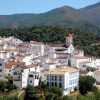
On the one hand, work will be carried out on the Church of Our Lady of the Immaculate Conception in Daimalos, a hamlet in Arenas, to improve the preservation of its roofs. This building is a listed Building of Cultural Interest and dates back to 1505, making it one of the oldest in the province.
This church is currently closed due to the poor condition of the nave’s roof structure, which poses a risk of components collapsing into the interior. With a constructed area of 189 square meters, it was established in 1505 at the behest of Queen Isabella, under the patronage of Our Lady of the Immaculate Conception, by order of the then Archbishop of Seville and Metropolitan of Málaga, the Dominican Friar Diego de Deza, according to a Bull of Pope Innocent VIII and later confirmed in 1510 by Pope Julius II.
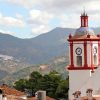
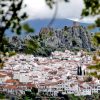
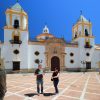
The second project will take place at the Church of Our Lady of the Rosary in Benaoján, where conservation work and roof replacement will be carried out on the bell tower. This is a very important building for the town, as it shares the spotlight with the town hall in the central square. The tower is precisely the architectural and visual element that dominates the urban landscape of Benaoján. It dates back to the 17th century, although it has undergone several renovations since then.